Baby food
gerber 2nd foods
Draft · Unpublished
| Product | gerber 2nd foods |
|---|---|
| Maker | — |
| Category | Baby food |
| Size / format | 4 oz jars; pouches in some flavors. |
| Observed price | ~$1.00-1.35 / jar (rough, not verified) |
| Price source / date | Typical US grocery |
| Price confidence | unverified |
| Recall status | No active recall found for 2nd Foods. |
Gerber 2nd Foods is not a brand you love. It's a brand you grab — off the shelf, on autopilot, because it's there and it's cheap and the baby needs to eat. There's no shame in that. But a review should be honest about what "infrastructure" means: this is the tap water of baby food.
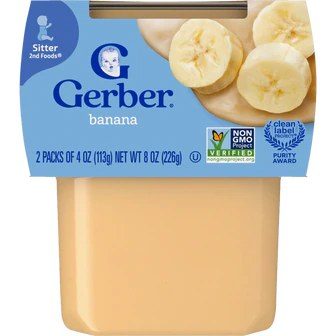
What it is: Gerber's Stage 2 jarred purées (and pouches in some flavors) for sitters around 6 months and up — Apple, Banana, Sweet Potato, Pear, the classics. Four-ounce jars, non-GMO, no artificial flavors or colors, typically around 60–70 kcal and zero added sugar per jar. The core mainstream baby food line, current in 2026.
What's genuinely good: ubiquity and price are real virtues when you're buying baby food by the dozens. This is the default first grocery run — every store carries it, the jars are cheap (rough shelf chatter puts them around $1.00–1.35, though that's UNVERIFIED), and there's no learning curve. For a first-time parent staring down the baby aisle, "the one everyone buys" is genuinely useful information. Sentiment is neutral-to-positive: nobody's angry at Gerber 2nd Foods, because there's nothing to be angry at. It does the job.
What's actually wrong: the honest complaint is the absence of anything to praise beyond availability and price. The research found little passion either way — it's infrastructure, not a lifestyle brand — and the evidence is thin, with individual review text not sampled. Parents tend to buy it, then graduate to pouches or homemade, which tells you where it sits in the lifecycle: a starter, not a destination. The price itself is UNVERIFIED — no firm figure was captured — so even the value story is directional. And context matters now in a way it didn't five years ago: the heavy-metals era (California's AB 899 testing law, the FDA's January 2025 lead guidance, the string of lead recalls from WanaBana through Sprout) has trained a generation of parents to read baby-food labels skeptically. Gerber's mainstream positioning doesn't exempt it from that scrutiny; "everyone buys it" is not a purity claim. Skip it if you're specifically shopping for clean-label credentials — the organic and cold-pressed brands in this guide exist for that. Don't skip it if you just need affordable jars this week.
The social pulse: there isn't one, really, and that's the point. Gerber 2nd Foods doesn't generate forum threads — it generates grocery lists. It comes up as the assumed background of conversations about other brands ("we started with Gerber, then switched to..."), which is the most telling data point of all: it's the beginning of the journey, rarely the end. No hype flags, no backlash, no community — just shelf space.
Value call: with the price UNVERIFIED, the value case rests on category position rather than a number — Gerber is historically the price floor of branded baby food, under Beech-Nut (~$1.56/jar, stale-risk) and far under Once Upon a Farm ($2.99) or Cerebelly ($3.58). If the rough $1.00–1.35 holds, it's the cheapest way to put purée in front of a baby short of making it yourself. The straight answer: it's the rational default for the price-conscious, and the premium brands need to justify themselves against it, not the other way around.
The tap water of baby food — everywhere, fine, unexamined. Sometimes that's exactly what you need.
Sources
No standalone source URLs with retrieval records were captured for this entry — sources are cited inside the research text above.