Family organization & routines
DayClox Digital Day Clock — DayClox
Draft · Unpublished
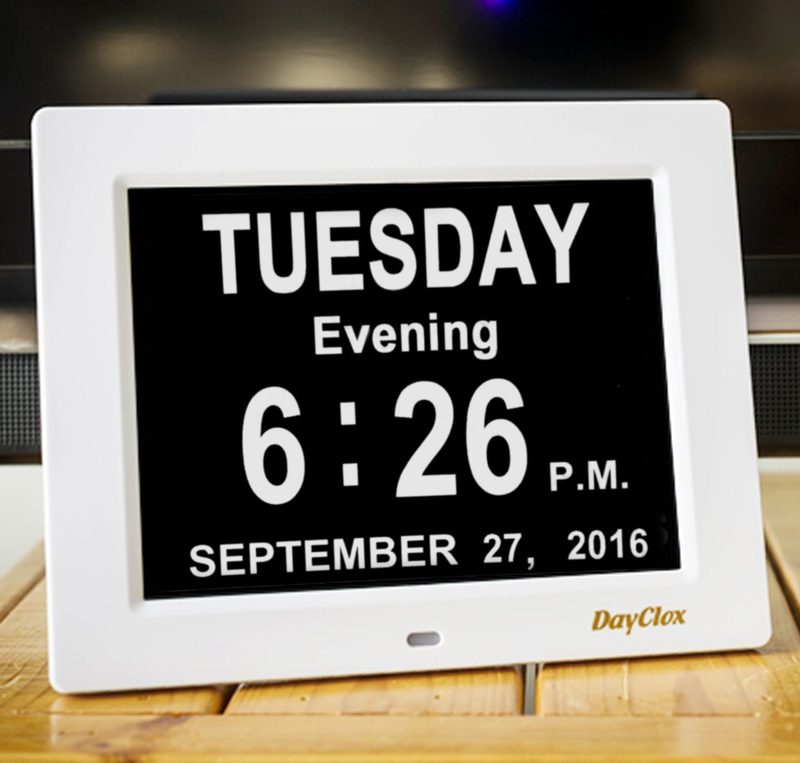
| Product | DayClox Digital Day Clock |
|---|---|
| Maker | DayClox |
| Category | Family organization & routines |
| Size / format | 8-inch screen; for seniors with memory loss/dementia (off-category for baby/toddler). |
| Observed price | £64.99–£87.50 (UK retailers; US pricing UNVERIFIED) |
| Price source / date | Manage At Home / Felgains / AlzProducts (UK) · 2026-09-22 |
| Price confidence | indexed |
| Recall status | No exact-model recall found in consulted sources for window 2023-09-22 to 2026-09-22. CPSC database not directly queryable via available tools — status is unchecked, never cleared. |
Let's be honest about what this is: the DayClox is a senior-care product — a digital day clock designed for people with dementia, Alzheimer's, or memory loss — that landed in a baby/toddler batch. I'm reviewing it as assigned, but this isn't a nursery item. It's a gift for a grandparent. And in its actual category, it's genuinely well-regarded: UK senior-care retailers describe it as declared the best "Easy to Read" clock by Alzheimer and dementia communities, and it's stocked by dementia-care specialists rather than gadget shops.
What's genuinely good: the design details show someone thought about cognitive impairment, not just big digits. The day and month are spelled out in full — Wednesday, November — because abbreviations like WED and NOV are genuinely hard to process for someone with dementia. That's a small detail that separates real assistive design from a big-digit clock. The day periods (Early Morning / Morning / Afternoon / Evening / Night) answer the most-asked question in dementia care: "is it day or night?" The 1.5-inch digits are readable from 15 feet, the auto night dimmer (7 pm–1 am) prevents the clock from lighting up a bedroom, the battery backup keeps time accurate through power cuts, and it's plug-and-play — pre-programmed before dispatch, so a family member just plugs it in. Silent operation, 12/24-hour modes, up to 15 languages, and four screen styles round out a thoughtful package.
The honest caveats. First, the category caveat: if you're shopping for baby/toddler gear, skip this — it has no nursery use. (Its inclusion here is a batch artifact.) Second, pricing is regional and variant-heavy: UK prices run £64.99–£87.50 depending on the model (standard, Type E/EC with day periods, 3-in-1), and US pricing is unverified — one older US listing showed $32.50, which may reflect an older model. Confirm which variant you're buying. Third, it's mains-powered — the battery only backs up the time during outages; the display needs the wall plug, so placement depends on an outlet. Fourth, 8 inches is a desk/wall clock, not a room display — for someone with significant vision impairment, larger options exist. Fifth, "best Easy to Read clock" is a retailer claim attributed to communities, not a clinical trial — treat it as strong word-of-mouth, not evidence.
The social pulse: DayClox lives in caregiver communities — dementia-care forums, senior-care shops, occupational-therapist recommendations — where it's the default answer to "what clock for my mum with Alzheimer's?" That kind of community consensus in a caregiving context is hard-won and worth more than star ratings. It doesn't have mainstream buzz because it doesn't need it; its buyers find it through care channels.
Value call: £65–£88 is fair for a purpose-built assistive clock — the day-period feature and full-word display justify the premium over a $15 big-digit clock from a general retailer. If you're buying for a grandparent with early memory loss, this is the right product. If you're buying for a nursery, you've wandered into the wrong aisle.
Bottom line: an excellent dementia day clock — and a reminder to check that what's in your cart matches who you're shopping for.
The first buying decision is the aisle check: this is a senior-care product, and if it landed in your cart during baby shopping, something went wrong upstream. For its actual buyer — someone shopping for a parent or grandparent with early memory loss — the variant choice is the thing to get right. The day-period models (Early Morning through Night) answer the question dementia caregivers hear most, 'is it day or night,' and they're worth the step up from the standard. Confirm the variant before ordering, because the UK pricing spans £65–£88 across models and the listings blur together. The gift logistics matter too: it's pre-programmed before dispatch and plug-and-play on arrival, which makes it a genuinely good gift for a family member to set up — no configuration visit required. Just remember it's mains-powered; the battery only covers outages, so placement needs an outlet. Right product, right person, right variant.